
Information / Synopsis
Twins is a "mahjong"-style puzzle arcade game developed by Ecogames between 1993 and 1994, the first game published by the Sabadell studio. The original programming was handled by Manel Miralles Jové, with graphic design by Jose L. Sánchez. Marcos Hernández joined the project in its final stretch to develop the Italian version of the game.
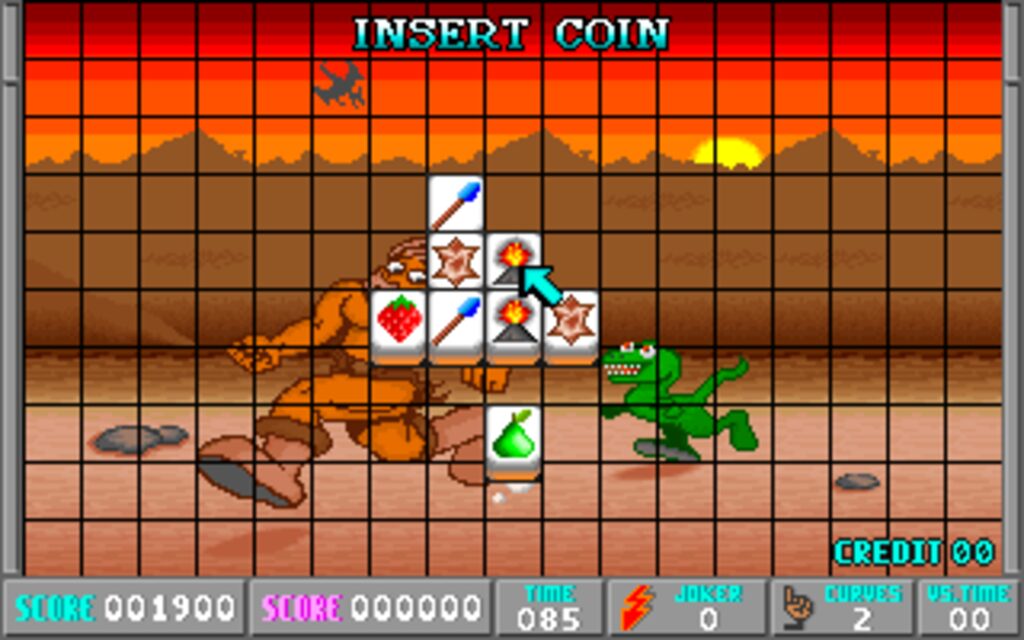
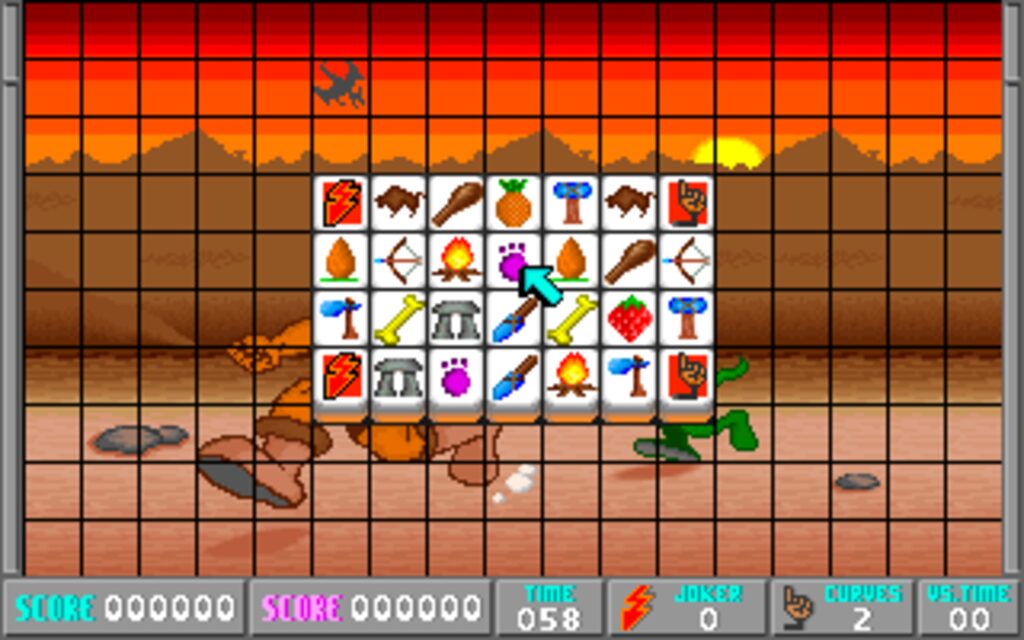
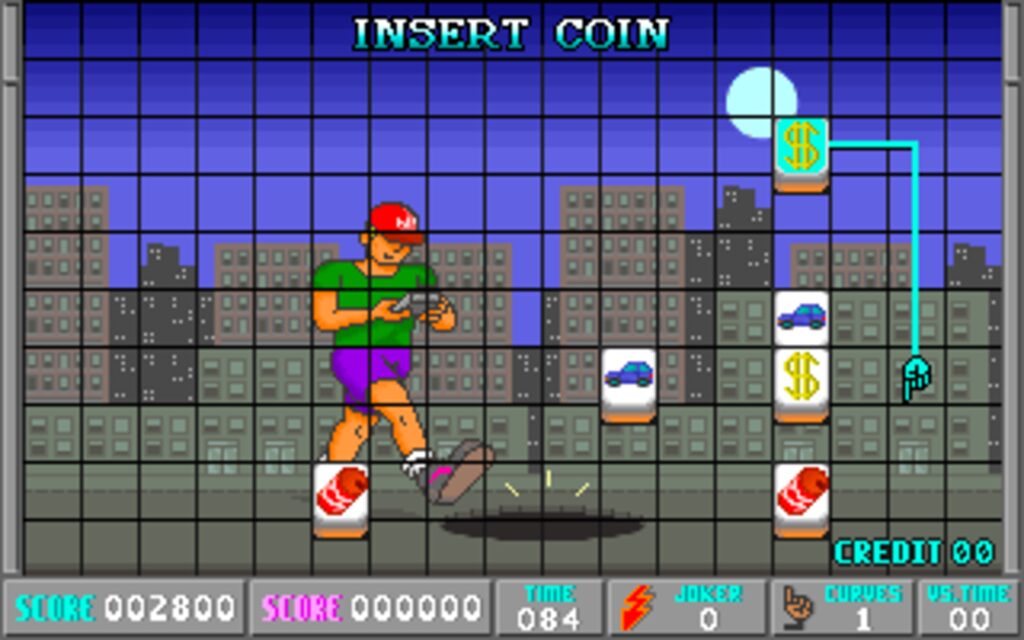
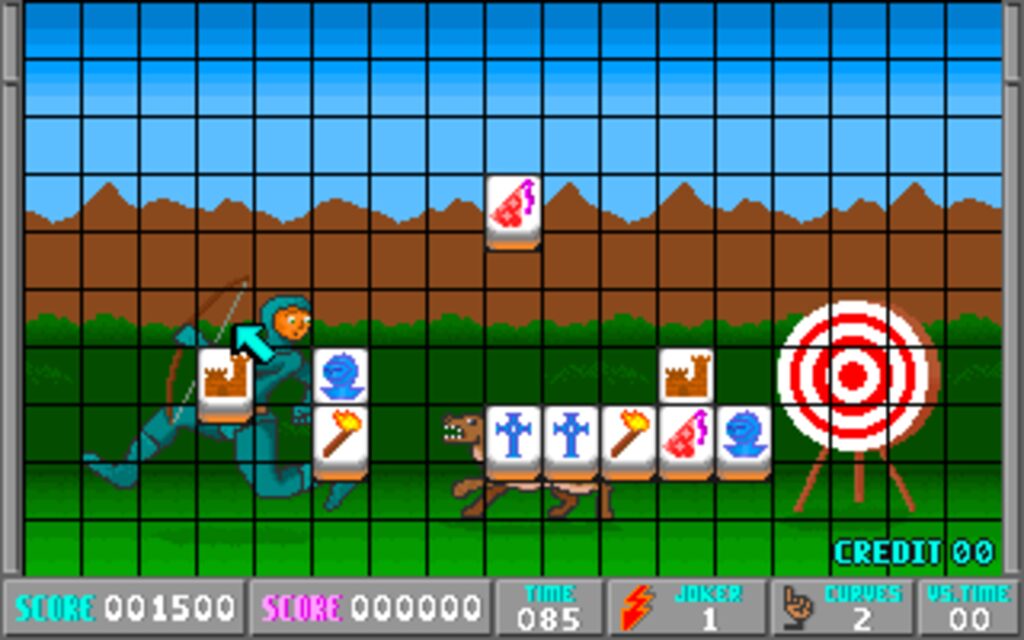
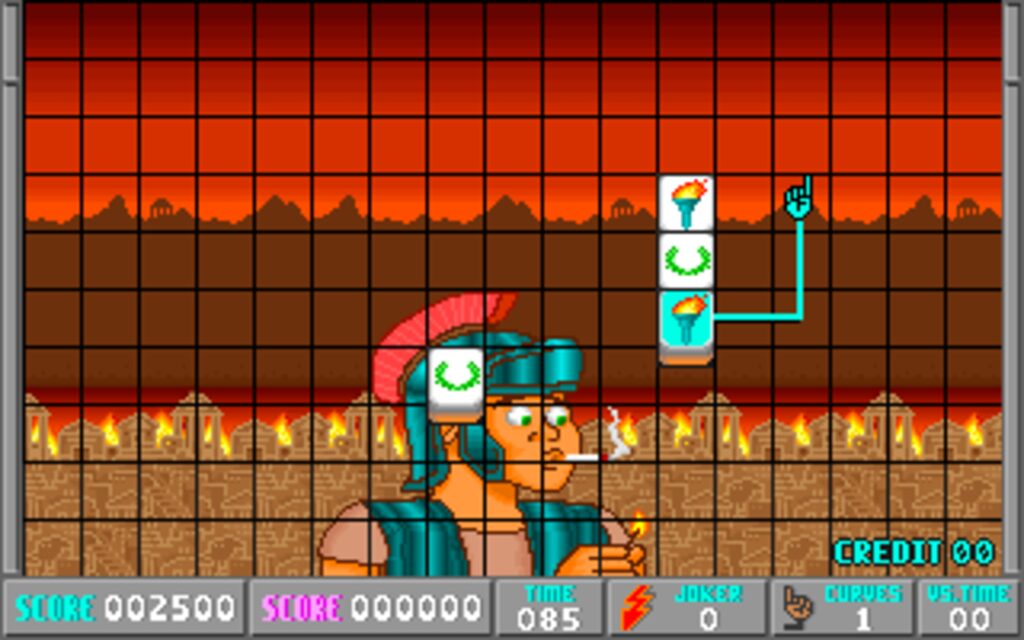
The mechanic builds on classic mahjong solitaire: the board is populated with tiles arranged in identical pairs, and one or two players must match and remove them until the screen is completely cleared, against the clock and competing for the high score. What sets Twins apart is its setting. Instead of a single oriental motif, the game offers a journey through four historical periods —prehistory, the Roman Empire, the Middle Ages and the contemporary era—, with both the backgrounds and the tile icons rewritten to fit each one. The progression through periods works both as a narrative thread and as visual variety on top of a deliberately simple mechanic.
Marcos's technical contribution to the project was concentrated in the Italian version, commissioned by the distributor for that market. In this revision, the original backgrounds are replaced by digitised images —suggestive photographs of models— that appear behind the board. The challenge was not the change of art itself, but getting those images to coexist with the rest of the game's colour scheme within a very limited palette. To solve this, Marcos developed a set of utilities and palette-remapping routines that dynamically adapted each image to the available colour space: while the player cleared the board, the image remained tinted and integrated into the stage's global palette, and once the level was completed it was rebuilt with its original colours —as faithfully as the hardware constraints allowed. The technique was a variant of the approach the team had been exploring in their early experiments with 3D engines: rendering internally with more colour depth than the target supported, and then mapping the result to the VGA's indexed palette through a conversion table.
Technically, Twins runs on the board designed by Salvador Casamiquela (GAMART): a system based on the NEC V30 at 10-12 MHz, with a linear video buffer similar to that of a basic VGA, a programmable palette and an AY-family sound chip like the one used in the first MSX machines. The board had no hardware sprites, no scroll and no double buffer, so all drawing of the board, the tiles and the backgrounds had to be resolved by writing directly to video memory, squeezing every CPU cycle to the limit. Casamiquela himself and his cousin Cinto Ventura —an expert in C— gave the team unpaid technical support throughout development. The game is written entirely in assembly.
Twins received an award from the magazine PC Actual in 1994, collected by Manel Miralles and Jose L. Sánchez on behalf of the studio. It was also the first product that opened the doors of the arcade market for Ecogames.
The story behind the development, the Italian version and the day-to-day life of the studio during those months is told in Diario de un desarrollador de juegos arcade, Marcos Hernández's autobiographical section published within Javier Sancho's book La edad oscura del videojuego español de los 90 - Volumen 2.
Links
Releases
Screenshots
Credits
| Design | |
| Graphics | |
| Programming | |
| Programmer | |
| Lead Programmer |